AZ 480-999-4242
Pilot Light Out? How to Manually Light Your Furnace
Is your Furnace pilot light out? Safely relight it with our guide! Learn causes, troubleshoot, and know when to call a heating pro.
Understanding Your Furnace Pilot Light System
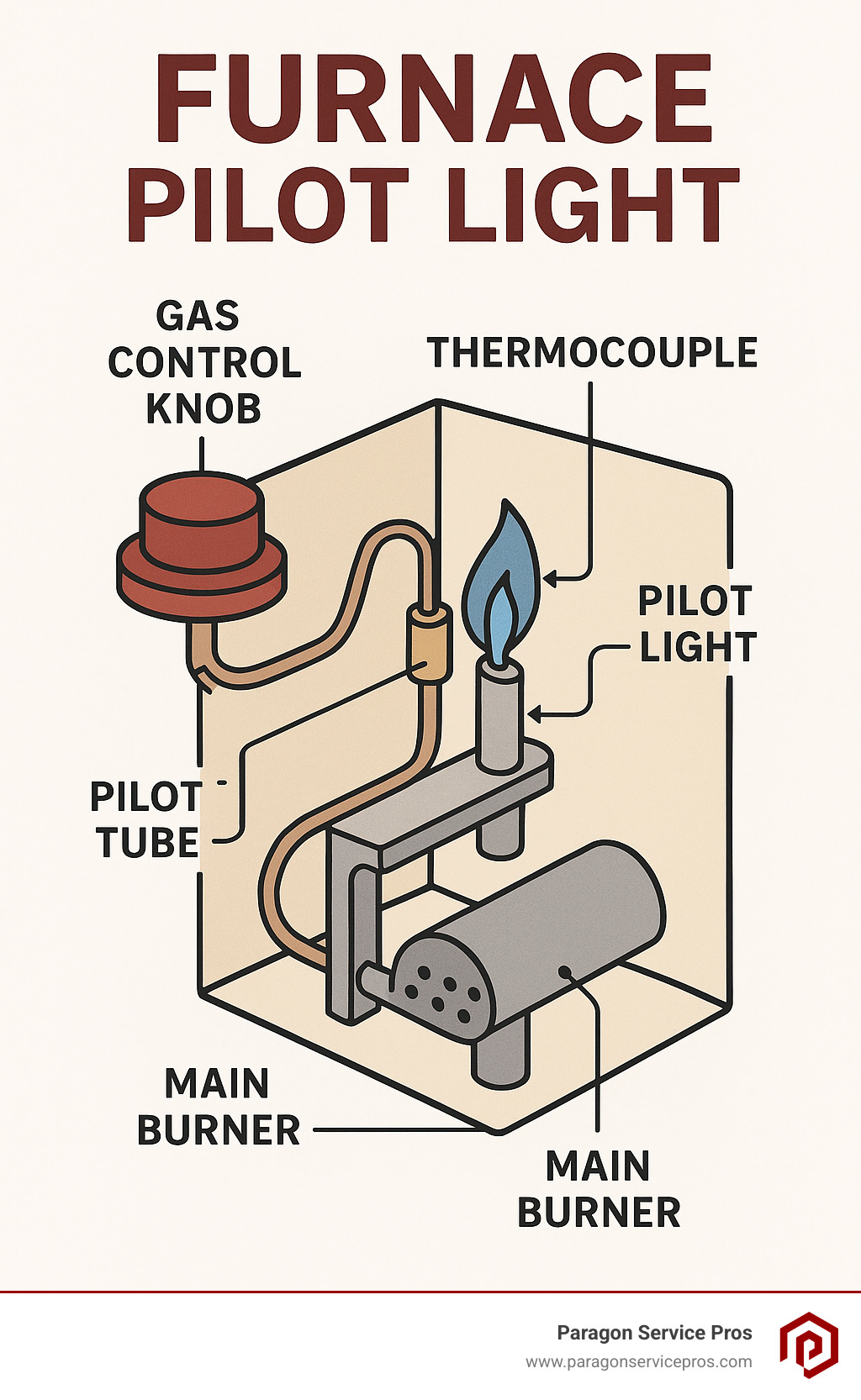
A furnace pilot light is a small, continuously burning flame that ignites the main gas burners in older heating systems. This flame is the ignition source that lights the burners when your thermostat calls for heat.
Key Facts About Furnace Pilot Lights:
- Purpose: Ignites the main gas burners to heat your home
- Location: Usually found near the bottom of the furnace behind an access panel
- Safety: Protected by a thermocouple that shuts off gas if the flame goes out
- Age: Common in furnaces manufactured before the 1990s
- Modern Alternative: Newer furnaces use electronic ignition systems instead
When your pilot light works correctly, the thermostat signals for heat, the gas valve opens, and the pilot flame ignites the main burners. The heated air then circulates through your home’s ductwork.
Standing pilot lights burn continuously, even when the furnace isn’t actively heating. This older technology contrasts with modern electronic ignition systems that only create a spark when heat is needed, making them more energy-efficient.
If your furnace won’t start, the pilot light is often the first thing to check. A properly functioning pilot flame should be a steady, blue cone about 1-2 inches tall.
Older vs. Newer Furnaces
Not all furnaces have a pilot light; the type of ignition system depends on the furnace’s age. If your furnace is over 20 years old, it likely has a traditional standing pilot light, which is a small, constant flame.
Furnaces manufactured since the mid-1990s, and especially after 2010, typically use an electronic ignition system. This means there’s no continuously burning flame. Instead, the furnace uses a hot surface igniter or an intermittent pilot that only activates when the thermostat signals for heat. This change was driven by a desire for greater energy efficiency, as a constantly burning pilot light consumes gas year-round.
Here’s a quick comparison:
| Feature | Standing Pilot Light (Older Furnaces) | Electronic Ignition Systems (Newer Furnaces) |
|---|---|---|
| Flame | Constant, small flame | No constant flame; ignites only when needed |
| Ignition Method | Manual relighting often required | Automatic (hot surface igniter or intermittent pilot) |
| Key Component | Thermocouple | Hot surface igniter or spark igniter |
| Energy Efficiency | Lower (constant gas use) | Higher (gas used only when igniting) |
| Common AFUE Rating | Below 80% | 90%+ (ENERGY STAR models 94-98.5%) |
| Maintenance | Pilot light may go out, thermocouple issues | Igniter failure, control board issues |
Newer models, particularly ENERGY STAR certified furnaces with an Annual Fuel Utilization Efficiency (AFUE) rating of 94-98.5%, are designed to significantly reduce energy bills. While older gas furnaces can have a long service life, those with standing pilot lights are less efficient. You can find More info about modern furnaces or get details on efficiency from Information on furnace efficiency from ENERGY STAR.
Why Your Pilot Light Went Out: Common Causes
When your furnace suddenly stops working on a cold evening, the culprit is often a furnace pilot light that has gone out. Pilot lights extinguish for several predictable reasons, and understanding them can help you diagnose the problem.
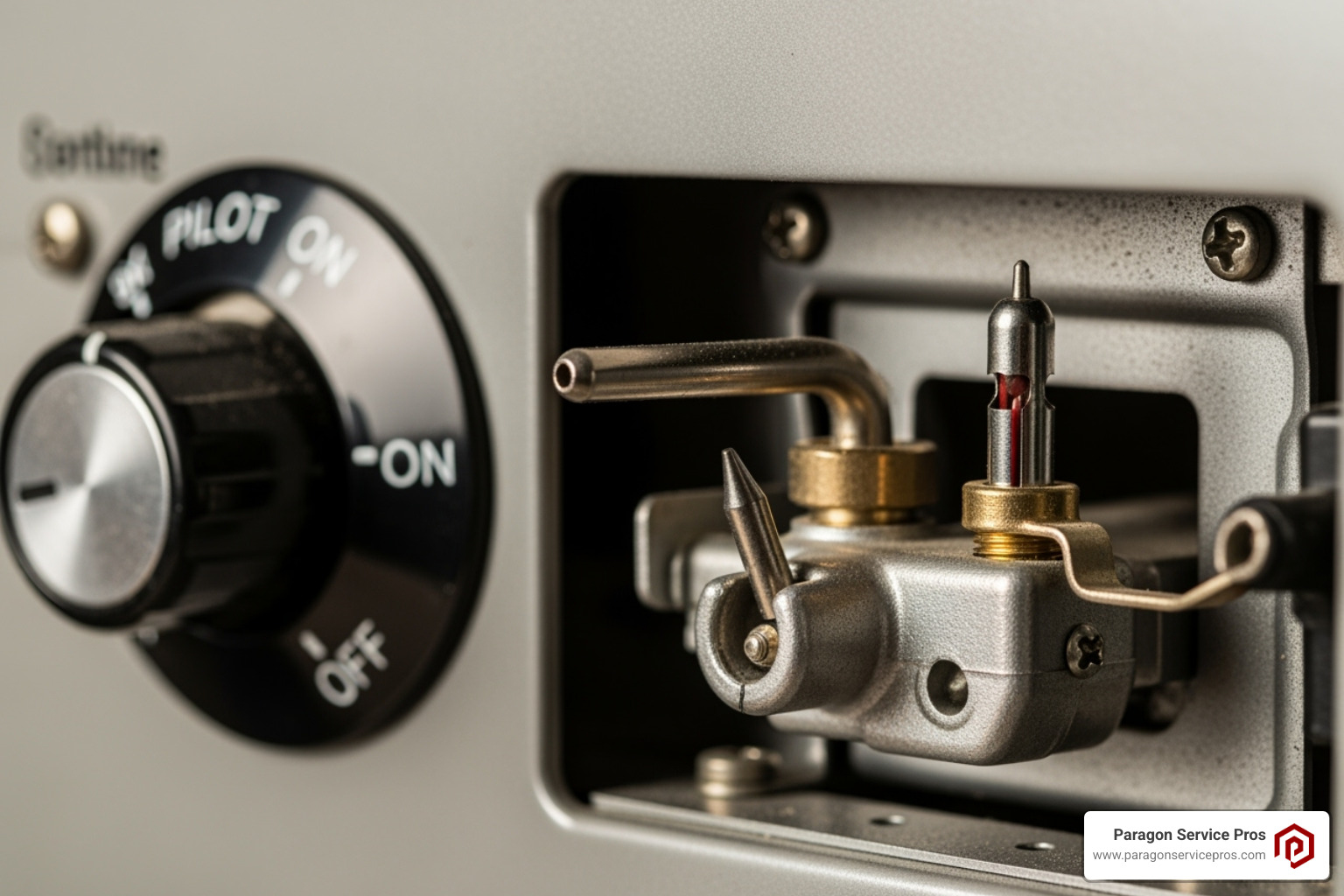
- Faulty Thermocouple: This safety device signals the gas valve to stay open when the pilot is lit. If the thermocouple is dirty, bent, or worn out, it will shut off the gas supply even if the flame is present.
- Strong Drafts: A gust of wind from a damaged flue pipe, poor sealing around the furnace, or even a cross-breeze can blow out the small pilot flame.
- Clogged Pilot Orifice: This tiny opening delivers gas to the pilot flame. Over time, dust and debris can build up and block it, weakening the flame until it goes out.
- Gas Supply Issues: The pilot light can’t stay lit without adequate fuel. This can be caused by a partially closed gas valve, problems with the main gas line, or a temporary service interruption from your utility company.
- Dirty Air Filters: A severely clogged filter restricts airflow, causing the furnace to overheat. As a safety measure, the furnace will shut down, which can extinguish the pilot light.
- Overheated Furnace: Beyond a dirty filter, a faulty limit switch or ventilation problems can also cause the furnace to overheat and trigger a safety shutdown that snuffs out the pilot flame.
The Role of the Thermocouple
The thermocouple is a critical safety component. It’s a small metal rod that sits in the pilot flame and generates a tiny electrical current (measured in millivolts) when heated.
This current signals the main gas valve that it’s safe to allow gas to flow. If the pilot flame goes out, the thermocouple cools, the current stops, and the gas valve immediately closes. This prevents dangerous, unburned gas from accumulating in your home.
A failing thermocouple is a common reason a pilot light won’t stay lit. You might be able to light the pilot while holding the reset button, but it goes out as soon as you release it. This indicates the thermocouple is no longer producing the necessary electrical signal to keep the gas valve open.
What a Healthy Furnace Pilot Light Looks Like
A healthy furnace pilot light should be a steady, blue flame about an inch to an inch and a half tall, shaped like a cone. It shouldn’t flicker or dance.
The strong blue color indicates complete combustion, which is hot enough to keep the thermocouple working correctly. If you see other colors or behaviors, it’s a sign of a problem:
- Yellow or Orange Flames: These colors signal incomplete combustion, often due to a dirty pilot assembly or insufficient oxygen. A yellow flame isn’t hot enough to keep the thermocouple engaged and, more seriously, can produce carbon monoxide. This is a dangerous, odorless gas, so a yellow or orange flame should be addressed immediately.
- Flickering or Weak Flames: These often indicate a dirty pilot tube restricting gas flow or poor airflow starving the flame of oxygen. A weak flame can easily go out on its own.
How to Safely Relight Your Furnace Pilot Light: A Step-by-Step Guide
Relighting your furnace pilot light can be a straightforward fix, but since it involves natural gas, safety is the top priority. Before you begin, you will need a long lighter or long-stemmed match and a flashlight.
Step 1: Prioritize Safety and Preparation
First, turn your thermostat to “Off” or “Heat Off” to prevent the furnace from trying to ignite while you work.
Next, smell for gas around the furnace. Natural gas is treated with an additive that gives it a distinct “rotten egg” smell. If you smell gas, stop immediately.
If you smell gas: Turn off the main gas valve to the furnace (the lever will be perpendicular to the pipe when off). Evacuate the house, open windows if it’s safe to do so, and call your gas company from outside. Do not use any phones or flip any electrical switches inside, as a spark could ignite the gas.
Finally, locate the instructions on your furnace. Most units have a label with specific relighting steps near the gas valve or inside the access panel. These instructions should be followed closely.
Step 2: Turn Off the Gas and Wait
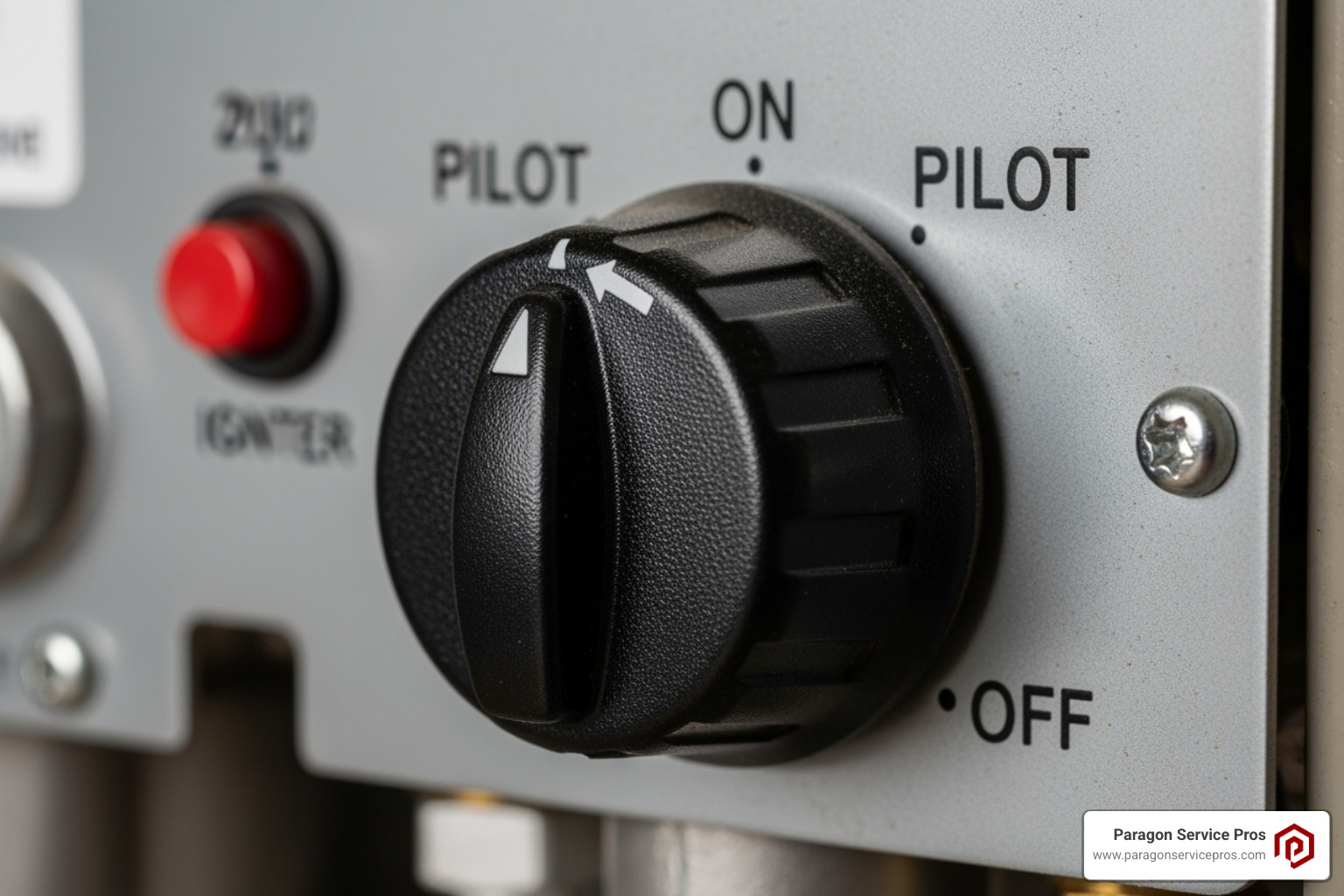
Locate the gas control knob on your furnace, which typically has “Off,” “Pilot,” and “On” settings.
Turn the knob to “OFF” to stop all gas flow. Wait 5 to 10 minutes for any residual gas in the combustion chamber to dissipate. Do not skip this waiting period, as it is a critical safety step to prevent a dangerous flash of flame upon relighting.
Step 3: Relight the Pilot Flame
Turn the control knob to the “PILOT” position. This allows gas to flow only to the pilot light assembly.
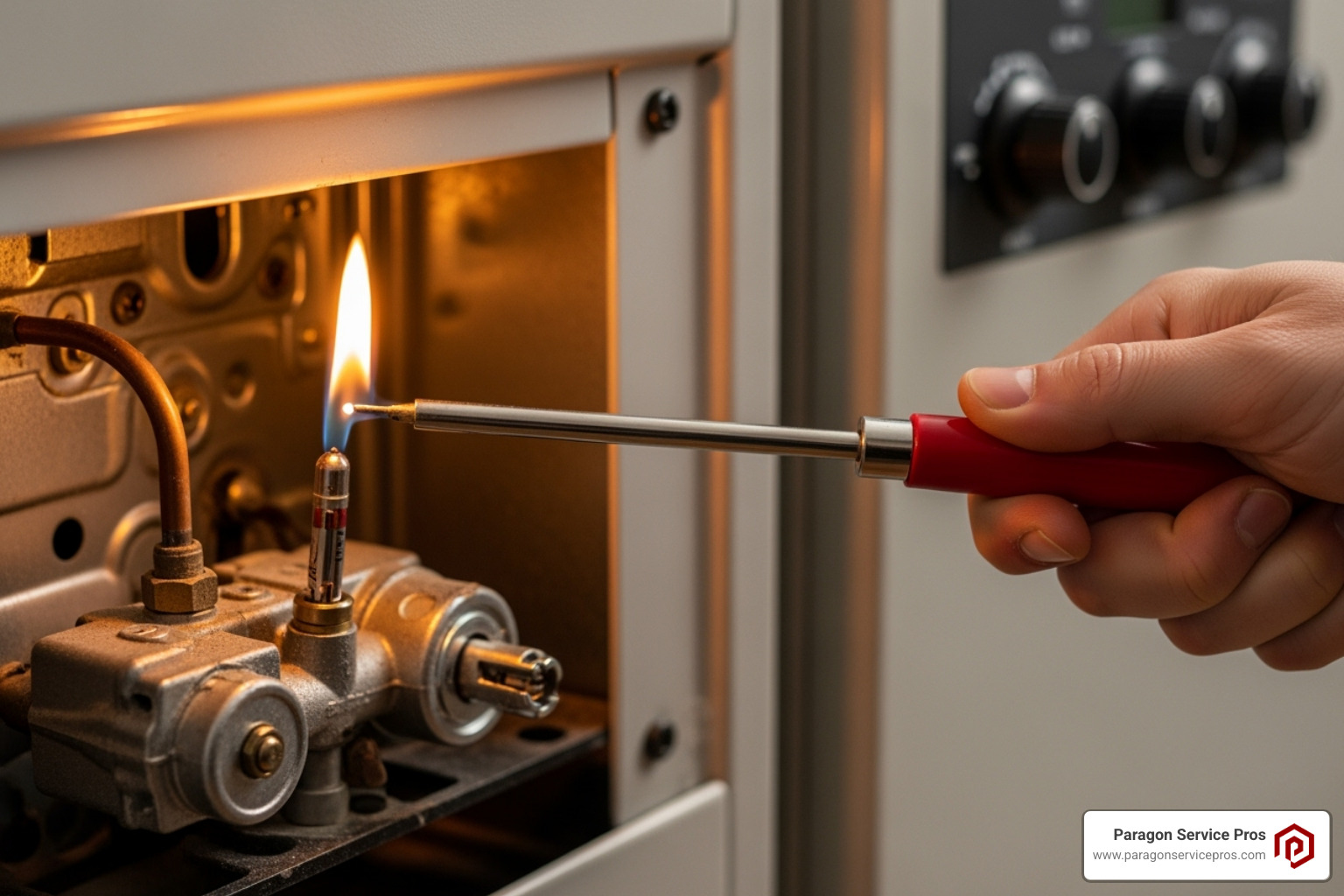
Find the reset button (it may be red and located near the control knob). Press and hold this button down to manually open the pilot’s gas valve. While holding the button, bring the flame from your long lighter to the pilot opening. The pilot flame should ignite.
Continue holding the reset button for 30 to 60 seconds after the pilot is lit. This allows the thermocouple to heat up and start generating the electrical signal needed to keep the gas valve open. Releasing the button too soon will cause the flame to go out.
Step 4: Confirm and Turn On
Slowly release the reset button. The pilot flame should remain lit. If it goes out, wait another 5 minutes for gas to clear and repeat the process. It may take a couple of tries.
Once the pilot stays lit, turn the control knob from “PILOT” to “ON”. This allows gas to flow to the main burners.
Replace the furnace access panel and turn your thermostat back on to your desired temperature. You should hear the furnace kick on and feel warm air from your vents shortly.
Regular maintenance can prevent future pilot light problems. Learn more about Seasonal HVAC Maintenance.
Troubleshooting Recurring Pilot Light Problems
If you’ve had to relight your furnace pilot light multiple times, it’s a sign of an underlying issue that needs to be addressed.
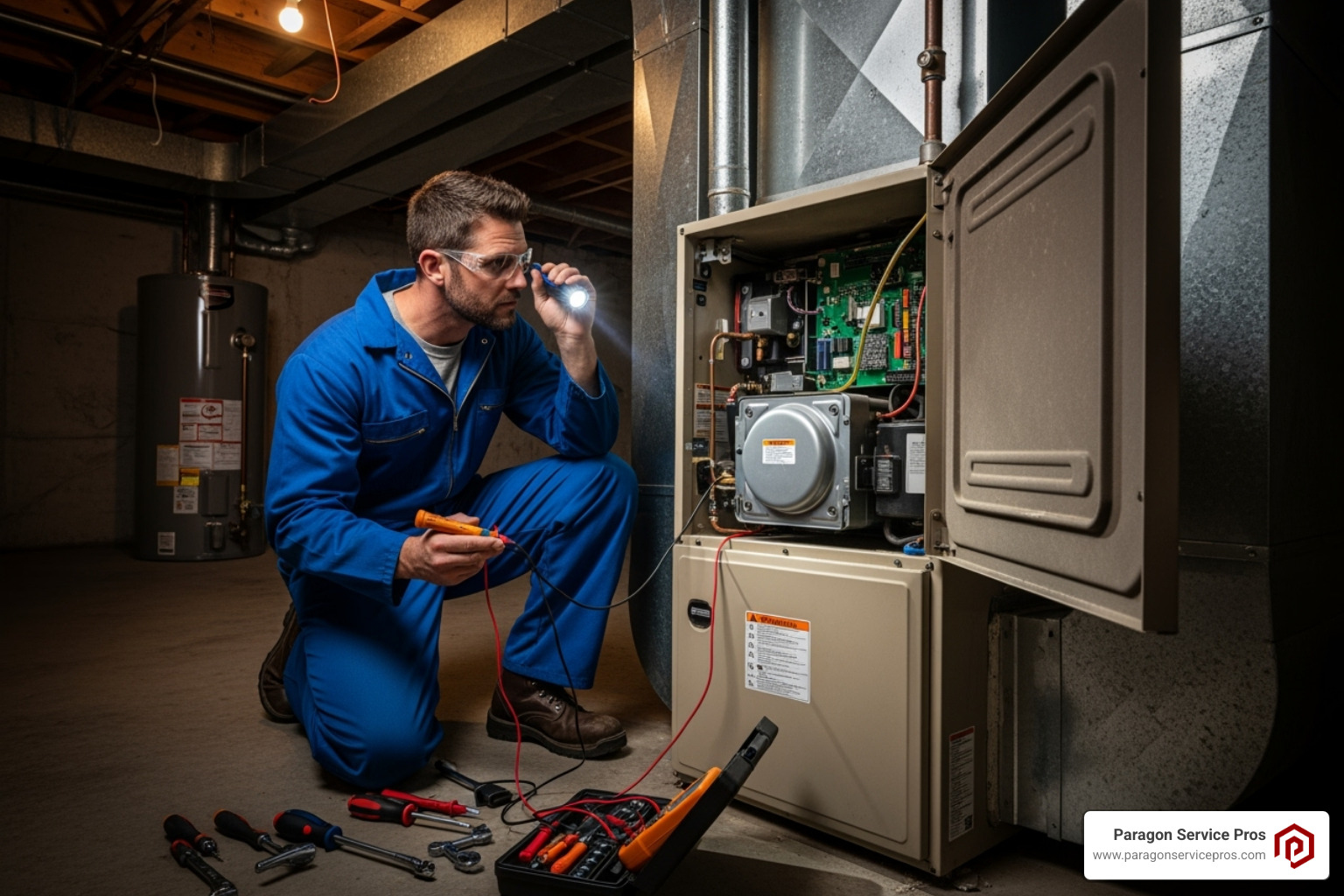
- Pilot won’t light at all: This could be due to a completely blocked pilot orifice, a gas supply problem, or a failed thermocouple. Check if other gas appliances in your home are working to rule out a main gas line issue.
- Pilot lights but won’t stay lit: This is the classic symptom of a faulty thermocouple. The pilot ignites while you hold the reset button but goes out upon release because the thermocouple isn’t sending the signal to keep the gas valve open.
- Main burners won’t ignite: If the pilot flame is lit but the main burners don’t turn on, the pilot flame may be too weak, or there could be a problem with the main gas valve or control board.
Cleaning a Dirty Pilot Orifice or Thermocouple
Some recurring pilot light issues can be solved with careful cleaning. For a dirty pilot orifice, you can gently poke a fine needle into the opening to dislodge debris. A can of compressed air can also be used to blow out any remaining particles. Be gentle, as these parts are delicate.
If your thermocouple is sooty, it may not be sensing the flame correctly. Gently clean the tip of the thermocouple (the part that sits in the flame) with fine-grit sandpaper or a cloth to remove any buildup. This can restore its ability to generate the necessary voltage.
If cleaning doesn’t solve the problem after a couple of attempts, it’s best to stop. The most effective DIY move is knowing when to call a professional. Our team is ready to help with Heating Maintenance when you need it.
Checking for Drafts and Airflow Issues
Air currents can be strong enough to extinguish the pilot flame. Check for the following issues:
- Inspect your flue pipe: This pipe carries exhaust gases outside. If it’s damaged or has loose connections, it can create drafts that blow out the pilot.
- Check for blocked vents: Your furnace’s intake and exhaust vents must be clear of obstructions like leaves, debris, or snow. In Arizona, dust and monsoon debris can cause blockages.
- Change your furnace filter: A severely clogged filter restricts airflow, which can cause the furnace to overheat and shut down, extinguishing the pilot light. We recommend changing your filter at least twice a year, or more often in dusty conditions.
- Seal drafts around the furnace: Check for air leaks around windows, doors, or gaps in the walls of the utility closet or garage where your furnace is located. Sealing these drafts can solve the problem.
When to Call a Professional for Heating Repair
While some furnace issues are suitable for DIY fixes, certain warning signs indicate it’s time to call a professional. When dealing with natural gas, your family’s safety is the top priority and is worth more than the cost of a service call.
Call for professional help if you encounter any of the following:
- You smell gas: If you detect the “rotten egg” odor of natural gas at any point, stop what you are doing. Turn off the main gas supply if you can do so safely, evacuate the house, and call your gas company from a safe distance. Do not use any electrical devices or phones inside.
- The pilot flame is yellow or sooty: A healthy flame is blue. A yellow, orange, or sooty flame indicates incomplete combustion, which can produce deadly carbon monoxide. Turn off your furnace and call for service immediately.
- The pilot light repeatedly goes out: If you’ve relit the pilot more than once and it continues to go out, there is likely an underlying mechanical failure. This could be a worn-out thermocouple, a faulty gas valve, or a persistent airflow problem that requires an expert.
- Signs of a cracked heat exchanger: While not a direct pilot light issue, a cracked heat exchanger is a serious safety hazard that can leak carbon monoxide into your home. Look for soot buildup around the furnace, unusual metallic smells, or visible cracks on components.
- The furnace won’t produce heat: If the pilot is lit but the furnace still doesn’t heat your home, the problem lies deeper within the system. It could be the main gas valve, burner igniter, limit switches, or the thermostat.
- Unusual noises: Hissing, banging, or crackling sounds are not normal. These often indicate mechanical problems that need professional diagnosis.
At Paragon Service Pros, our certified technicians are equipped to handle any heating issue safely and effectively. We provide transparent pricing and quality workmanship to Arizona homeowners. If you’re experiencing any of these warning signs or feel uncomfortable working with your furnace, we’re here to help. For more information, see our Heating Repair services.
Frequently Asked Questions about the Furnace Pilot Light
Here are answers to some of the most common questions we receive about furnace pilot lights.
Does a pilot light use a lot of gas?
A standing furnace pilot light uses a small but continuous amount of gas. Because the flame burns 24/7, it does add to your annual gas bill. This is one of the main reasons modern furnaces use more energy-efficient electronic ignition systems, which only use gas to create a spark when heat is needed.
If you have an older furnace, you can still lower your heating costs in other ways. See these Tips to save on your heating bill for practical strategies.
Is it dangerous if the pilot light goes out?
No, it is generally not dangerous if your pilot light goes out. Furnaces are designed with a key safety feature: the thermocouple. When the pilot flame is extinguished, the thermocouple cools down and automatically shuts off the gas supply to the pilot. This prevents unburned gas from building up.
The danger arises if the thermocouple fails and doesn’t shut off the gas. This is rare, but it’s why you should always smell for gas before working on your furnace. If you smell gas, evacuate the house and call your gas company.
Can I relight the pilot light on any furnace?
No, you can only manually relight a pilot light on an older furnace with a standing pilot system (typically manufactured before the mid-1990s).
Newer furnaces use electronic ignition systems, such as a hot surface igniter or an intermittent pilot. These systems ignite automatically and do not have a continuously burning flame that can be manually relit. If you have a newer furnace that isn’t working, the problem is likely with the electronic ignition or another component that requires professional diagnosis.
To determine your furnace type, check the manufacturer’s label or owner’s manual. You can also find more information on different types of furnaces and their ignition systems.
Your Furnace is in Good Hands
When your furnace pilot light acts up, relighting it can sometimes be a simple DIY fix. However, if the problem persists, it may be a symptom of a larger issue. If you find yourself repeatedly relighting the flame, or if you notice gas smells, strange noises, or other warning signs, it’s time to call a professional. Your safety and comfort are too important to risk.
Regular maintenance is the best way to prevent pilot light problems. A professional tune-up ensures all components, including the furnace pilot light assembly, are clean and functioning correctly. A well-maintained furnace runs more efficiently, saving you money on utility bills and extending its lifespan.
At Paragon Service Pros, we’ve helped Arizona homeowners stay warm and comfortable for years. We understand that when your heat goes out, you need a reliable team you can count on. That’s why we offer same-day and emergency appointments.
Our certified technicians have the expertise to diagnose and fix any furnace issue, from a stubborn pilot light to a complex mechanical failure. We believe in complete transparency, so we’ll explain the problem and your repair options clearly.
Whether you’re in Chandler, Gilbert, Mesa, or anywhere else in the Valley, we’re here to help. Don’t struggle with a faulty furnace. Schedule your Arizona HVAC Repair today and let our experienced team restore reliable warmth to your home.