AZ 480-999-4242
The Ultimate Guide to Smoke Odor Removal Products
Eliminate stubborn smoke odor removal! Our guide covers DIY, products, & pros for a fresh home. Get rid of smoke smell for good.
Why Smoke Odor Removal Requires the Right Products
Smoke odor removal is a tough cleaning challenge because microscopic smoke particles embed themselves deep into porous materials. Whether from cigarettes, a house fire, or a campfire, these stubborn odors require more than a simple air freshener. The key is using the right products and techniques to neutralize the odor-causing particles at their source.
Quick Solutions for Smoke Odor Removal:
- Ventilate: Open windows and use fans to circulate fresh air.
- Use Natural Absorbers: Place bowls of baking soda, white vinegar, or activated charcoal in affected areas.
- Clean Surfaces: Wash walls and hard surfaces with a 1:1 vinegar and water solution.
- Treat Fabrics: Wash clothes in hot water with baking soda and air-dry them in the sun.
- Purify the Air: Use HEPA air purifiers that have activated carbon filters.
- Call Professionals: For severe or persistent odors, especially those in your HVAC system, expert help is necessary.
Smoke contains microscopic particles, sticky tars, and volatile organic compounds (VOCs) that penetrate materials like carpets, furniture, and even drywall. Different types of smoke also present unique challenges. Fire smoke is acrid and intense, while cigarette smoke leaves a stale, layered residue. To be effective, you must use products that absorb or neutralize these particles, not just mask the smell.
Understanding Why Smoke Odors Linger
Smoke odor doesn’t just fade away; it’s made of microscopic particles that embed themselves deep into every porous material they find. Unlike other smells, smoke particles don’t just sit on surfaces—they penetrate them, making smoke odor removal a significant challenge.
The Science Behind Stubborn Smoke Smells
When something burns, it releases a complex mix of chemicals, including volatile organic compounds (VOCs), and sticky tar and resin. This oily residue from tar and resin creates a microscopic film that traps odor-causing molecules, refusing to let go. It’s this sticky quality that makes smoke smells so persistent.
Different types of smoke bring unique challenges. Cigarette smoke builds up layers of stale nicotine and tar residue. Fire smoke from a house fire is a harsh, acrid mix of burned plastics, fabrics, and chemicals. Even pleasant campfire smoke contains creosote, a tar-like substance that clings to clothing and hair. Natural fabrics like cotton and wool tend to hold smoke odors more stubbornly than synthetics.
Key Areas in Your Home That Trap Smoke
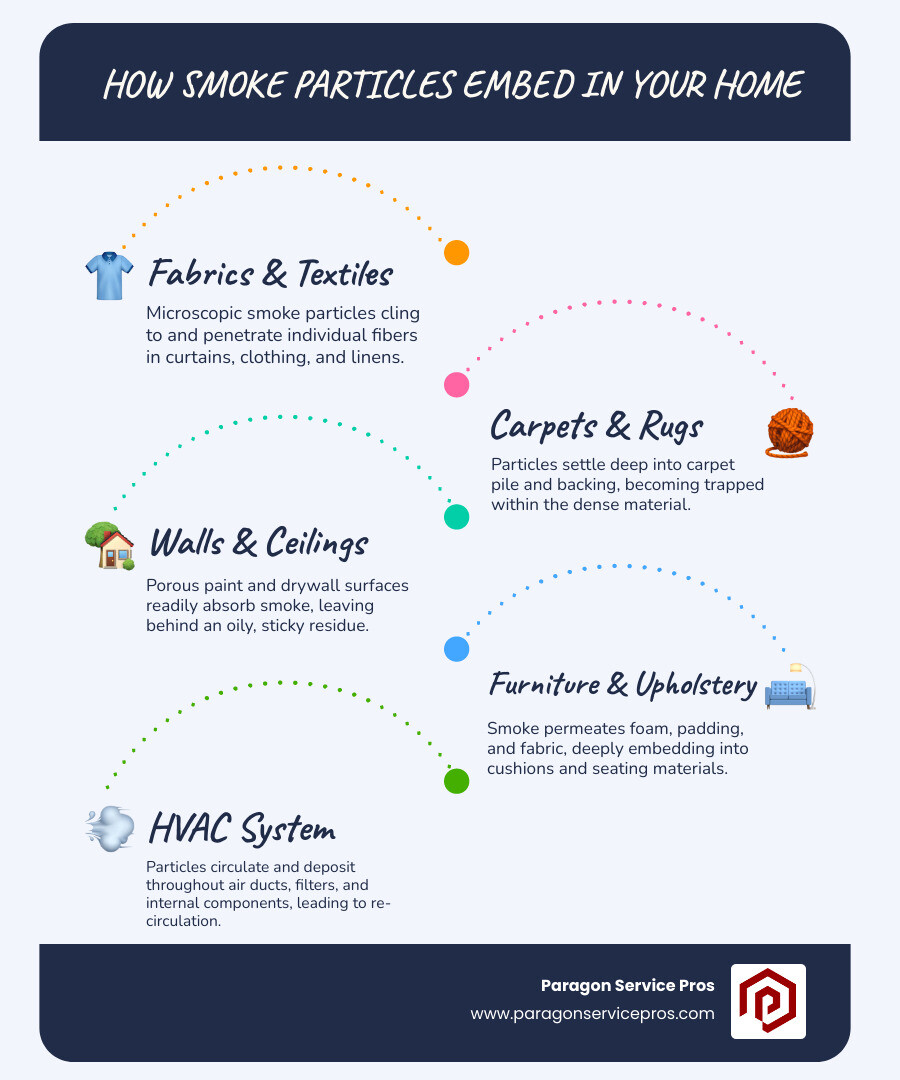
Smoke particles have favorite hiding spots in your home where they settle in for the long haul.
- Carpets and Rugs: These act like giant sponges. The fibers and underlying padding create a reservoir that slowly releases odors back into the room.
- Upholstery and Curtains: Sofas, chairs, and drapes offer a massive surface area for smoke particles to cling to, especially in heavy, pleated fabrics.
- Walls and Ceilings: Paint and drywall have microscopic pores where smoke particles settle. Over time, this can cause a visible yellowish-brown film.
- Clothing and Linens: As absorbent materials, fabrics easily trap smoke odors, which is why you smell like a bonfire after sitting near one.
- HVAC System Ductwork: This is the hidden villain of smoke odor removal. If your system was running during smoke exposure, it distributed particles throughout your entire home. These particles settle inside the ductwork, causing the system to recirculate the smoke smell long after you’ve cleaned everything else. This is why surface cleaning alone is often not enough. For more insight, see our guide on common HVAC system problems.
To truly eliminate smoke odor, you must address these hidden particles with a comprehensive approach.
DIY Products and Home Remedies for Smoke Smell
Before buying commercial products, check your kitchen cabinets. Common household staples can be surprisingly effective for smoke odor removal, especially for minor odors or as a first line of defense. These DIY solutions are accessible, safe for use around children and pets, and can make a noticeable difference.
Using Baking Soda and White Vinegar
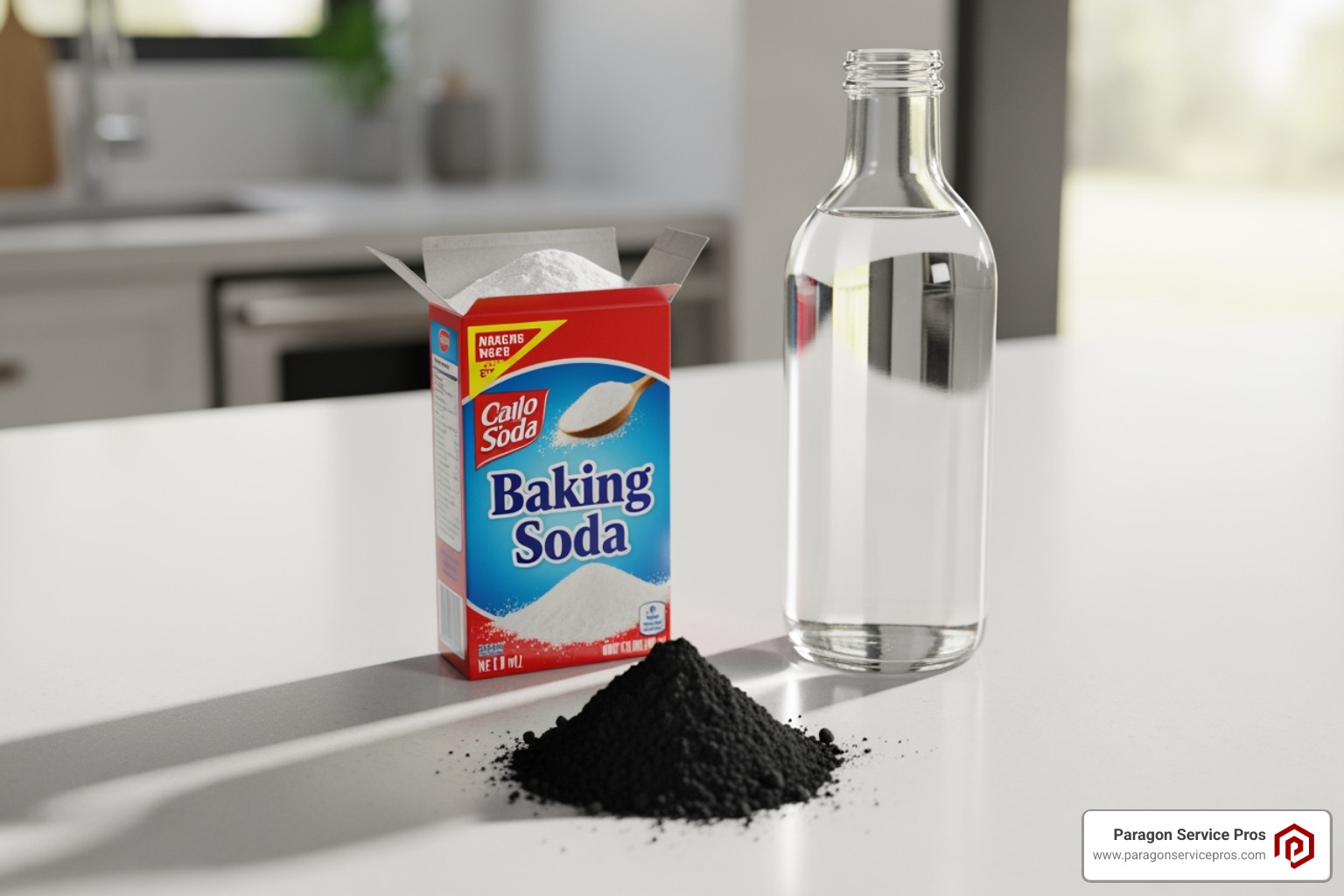
Baking soda and white vinegar are a powerful duo for odor elimination because they work on a chemical level, rather than just masking smells.
Baking soda is a natural odor neutralizer. It reacts with and neutralizes the acidic molecules that cause bad smells.
- For laundry: Add one cup of baking soda to your wash cycle with hot water (if fabric allows) to fight smoke smells. For stubborn odors, pre-soak clothes in a baking soda and water solution.
- For rooms and carpets: Sprinkle baking soda on carpets and furniture, let it sit overnight, and then vacuum it up. You can also place open bowls of baking soda around a room to absorb airborne odors.
White vinegar contains acetic acid, which breaks down the organic compounds in smoke residue.
- For laundry: Add one cup of white vinegar to the rinse cycle. The vinegar smell will dissipate as the clothes dry, taking the smoke smell with it. Important: Never put smoky clothes in a machine dryer until the odor is completely gone, as heat can set the smell permanently.
- For surfaces: A solution of equal parts white vinegar and warm water is a powerful cleaner for walls, countertops, and other hard surfaces.
The Power of Ventilation and Natural Absorbers
Simple methods can have a dramatic impact on smoke odor removal.
- Ventilation: Your first step should always be to open windows and doors. Use fans to push stale, smoky air out and draw fresh air in.
- Activated Charcoal: This material is extremely porous, making it excellent at trapping odor molecules. Place bowls or breathable bags of activated charcoal in rooms, closets, and drawers for continuous, silent odor control.
- Lemon Juice: The citric acid in lemon juice helps neutralize odors. A mix of lemon juice and water makes a great natural cleaning spray for surfaces.
- Sunlight: Hanging clothes and fabrics to dry in direct sunlight is highly effective. The sun’s UV rays help break down odor-causing molecules while fresh air carries them away.
For severe situations like fire damage, quick action is critical. You can find expert advice for post-fire cleanup at Information on post-fire cleanup.
A Roundup of Commercial Smoke Odor Removal Products
When DIY remedies aren’t enough, it’s time for commercial products designed for smoke odor removal. The key is to choose odor neutralizers, which break down smoke molecules, rather than masking agents, which only cover up the smell temporarily. Always read product labels for safe and effective use.
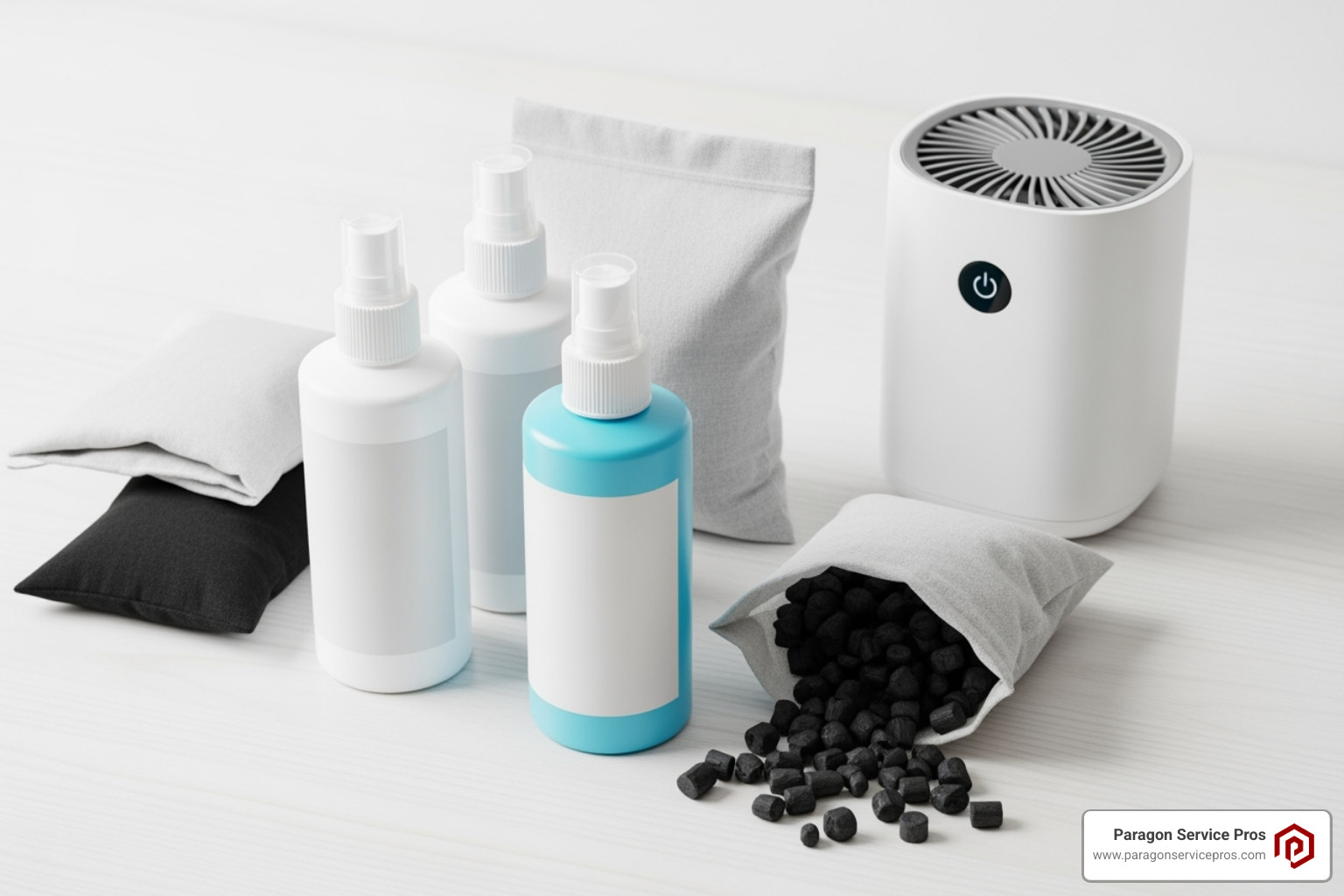
Odor-Neutralizing Sprays and Foggers
Commercial sprays and foggers use active ingredients to chemically break down smoke odor molecules.
- Enzyme Cleaners: These products contain biological enzymes that “eat” the organic matter in smoke residue, converting it into harmless compounds. They are especially effective on fabrics and carpets but require time to work, so don’t wipe them away too quickly.
- Chemical Neutralizers: These use compounds that react directly with smoke molecules to neutralize them. Look for products specifically formulated for smoke odors for the best results.
- Foggers (Odor Bombs): For large spaces or persistent odors, foggers are a great option. They release a fine mist that penetrates hard-to-reach cracks and crevices, reaching odors where sprays cannot. Follow all safety instructions, as you will need to vacate and ventilate the area after use.
Air Purifiers with HEPA and Activated Carbon Filters
An air purifier is a great investment for ongoing smoke odor removal and better indoor air quality. For smoke, you need a unit with a two-stage filtration system.
- HEPA Filters: These high-efficiency particulate air filters trap 99.97% of airborne particles 0.3 microns or larger, which includes most smoke particles, dust, and pollen.
- Activated Carbon Filters: Smoke also contains gases and volatile organic compounds (VOCs) that pass through a HEPA filter. Activated carbon uses a process called adsorption to trap these gas molecules on its porous surface.
A combination of both filters is essential for effective smoke removal. Also, ensure you choose a purifier correctly sized for your room. Your HVAC system also plays a major role in air quality, as explained by the EPA’s guide on how HVAC systems impact air quality.
If you suspect your AC system is contributing to poor air quality, it may need professional attention. Learn the signs in our guide: Air Conditioner SOS: Warning Signs Your Air Conditioner Needs Repair.
When to Call Professionals for Smoke Odor Removal
Sometimes, despite your best efforts, a stubborn smoke smell remains. This is when it’s time to call professional smoke odor removal specialists. They have the industrial-grade equipment and expertise to eliminate odors that DIY methods can’t reach.
You should consider calling a professional for:
- Persistent odors that won’t go away after multiple cleaning attempts.
- Severe fire damage, which creates complex chemical odors requiring professional restoration.
- Preparing a property for sale or rent, as lingering smoke odors can drastically lower property value.
- Health concerns related to thirdhand smoke, especially if you have children, elderly individuals, or family members with respiratory conditions.
The Role of Your HVAC System in Smoke Odor Removal
Your HVAC system can be the hidden source of recurring smoke smells. If it was running during smoke exposure, it likely pulled particles into the ductwork. Every time the system turns on, it recirculates these trapped particles, re-contaminating your home. Standard air filters cannot solve a contaminated duct system. This is why surface cleaning alone isn’t enough for complete smoke odor removal. Professional Air Duct Cleaning is often essential to break the cycle.
Advanced Professional Smoke Odor Removal Techniques
Professionals use advanced methods that eliminate odors at a molecular level.
-
Ozone Treatment: Ozone generators create O3, a highly reactive gas that chemically dismantles smoke molecules, converting them into odorless compounds. Because it’s a gas, ozone penetrates fabrics, drywall, and other porous materials. This treatment requires strict safety protocols, and the home must be evacuated during the process.
-
Thermal Fogging: This technique uses a heated deodorizing agent to create a fine mist that behaves like smoke. The fog follows the same path the smoke took, penetrating deep into materials to neutralize odor molecules where they hide. It is highly effective at reaching inaccessible areas like wall cavities and carpet padding.
For guidance on recovering from a house fire, consult official resources like this Guidance from FEMA on fire recovery.
Frequently Asked Questions about Eliminating Smoke Odors
Dealing with stubborn smoke smells can be frustrating. Here are answers to the most common questions we receive about smoke odor removal.
What is the most effective way to remove a heavy smoke smell from a house?
There’s no single magic bullet. The most effective method is a multi-layered approach:
- Ventilate the entire house thoroughly.
- Deep clean all hard surfaces (walls, ceilings, floors) with an odor-neutralizing cleaner.
- Wash or dry-clean all fabrics, including curtains, bedding, and clothing. Use baking soda or vinegar as a booster in the wash.
- Use odor absorbers like activated charcoal or bowls of vinegar in every room.
- Run an air purifier with both HEPA and activated carbon filters.
For severe cases, professional services like ozone treatment or thermal fogging are necessary to fully eliminate the odor.
How long does it take to get the smoke smell out of clothes?
It depends on the level of smoke exposure. For light smells (e.g., from a campfire), one wash cycle with a cup of baking soda or white vinegar is often sufficient. For heavier odors, you may need to pre-soak the clothes for several hours before washing. The most important step is to air-dry the clothes completely first. Putting them in a hot dryer before the smell is gone can permanently bake the odor into the fabric. If the smell remains after air-drying, repeat the washing process.
Can the smoke smell in a house be permanent?
No, smoke odor is not permanent, though it can be incredibly persistent. The reason it feels permanent is that smoke particles are microscopic and hide deep within porous materials. A quick surface clean won’t reach them. However, with a thorough, systematic approach that cleans all surfaces, treats all fabrics, purifies the air, and addresses hidden sources like the HVAC system, even the most stubborn smoke smells can be completely eliminated. In severe cases, this may require professional intervention.
Conclusion: Maintaining a Fresh, Smoke-Free Home
Eliminating smoke odor is achievable with the right approach. We’ve covered why smoke particles are so stubborn and provided a range of solutions, from DIY remedies like baking soda and white vinegar to professional-grade treatments. The key to effective smoke odor removal is a comprehensive strategy that addresses the specific type and severity of the odor.
Once you’ve achieved that fresh, clean air, prevention is the best way to maintain it.
- Establish a no-smoking policy indoors. This is the most effective way to prevent smoke residue buildup.
- Use kitchen exhaust fans when cooking to remove smoke before it can settle.
- Perform regular cleaning of surfaces and fabrics to prevent any new odors from taking hold.
Your HVAC system plays a crucial role in long-term air quality. Here in Arizona, our systems run nearly year-round, making their maintenance critical. A well-maintained system with clean filters continuously circulates and cleans your indoor air. Learn more about keeping your system in top shape with our guide on Seasonal HVAC Maintenance: Preparing Your System for Year-Round Comfort.
At Paragon Service Pros, we know that clean air is essential for a healthy and comfortable home. We specialize in ensuring your HVAC system supports optimal indoor air quality. Whether you’re battling lingering odors or want to improve your home’s air, we are here to help.
For expert assistance with your home’s air quality and HVAC system performance, schedule HVAC repair in Chandler. Everyone deserves to breathe easy at home.